Shared keyword strategy
One list of terms ranked by intent, volume, difficulty and ad cost, with a decision for each: rank for it, buy it, or both.
Search Engine Marketing
Search engine marketing means being there every time a buyer searches, whether they click an ad, a map pin or an organic result. aStash runs SEO and Google Ads from one keyword plan, so ads cover the terms you do not rank for yet and organic takes over as rankings climb.
A buyer who searches for an attorney, a plumber or a trailer manufacturer sees ads, a map pack and organic results on one screen. If you run ads with one agency and SEO with another, each one optimizes its own slice and nobody optimizes the page. Search engine marketing treats the results page as a whole.
In practice that means one keyword research set shared by both channels, ads switched on for high-value terms where you rank on page two, and ad budget pulled back as organic positions reach the top 3. Search terms that convert in Google Ads feed the content plan. Pages that rank organically get the ad landing page treatment. Every month the two reports are one report.
The law firm that generated 21.4K conversions from search campaigns and the firm that holds 1,045 #1 organic rankings are both aStash clients. The approach that works is the one that runs both.

The problem
When paid and organic search are run by different teams, they fight over the same keywords, report different numbers and both claim the same lead. The owner pays twice for one customer and cannot tell which channel earned it.
aStash runs both from one keyword set. Ads cover the terms you cannot yet rank for, organic work climbs those terms, and spend is pulled back as each one reaches the top 3.
Organic + paid
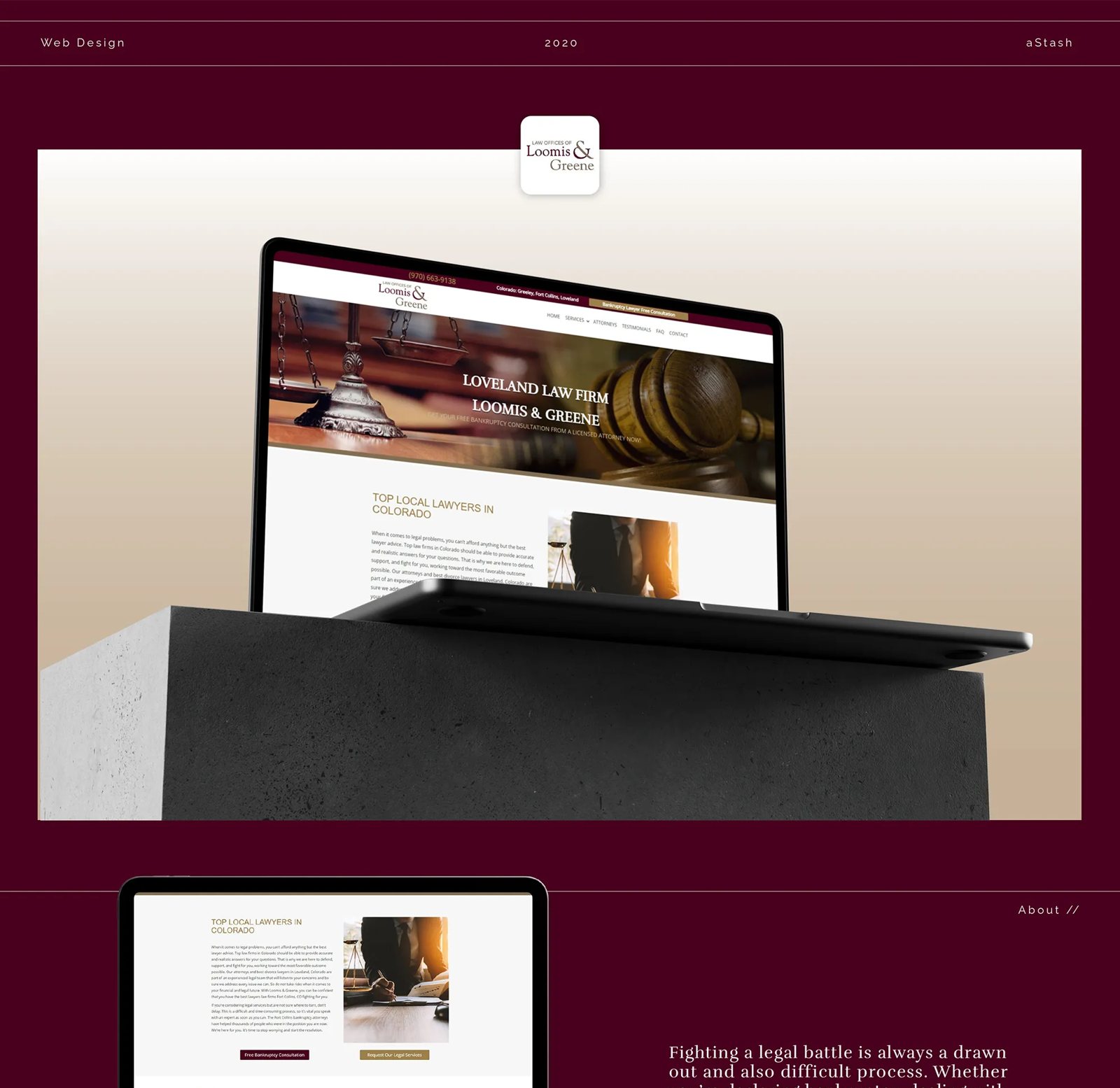
Loomis & Greene, a Colorado law firm: calls from Google Maps per year before and after aStash took over search.
Why combine them
What is included
One list of terms ranked by intent, volume, difficulty and ad cost, with a decision for each: rank for it, buy it, or both.
Search, Shopping, Local Services and Performance Max campaigns with weekly optimization and conversion tracking.
Technical fixes, on-page work, content and links from the same team, using the search terms ads prove convert.
Ad spend reduced on keywords as they reach the organic top 3 and shifted to the next tier of terms.
Selected work



Results
aStash clients on the same search results page.
What you get
For the searches that matter most you appear in the ads, in the map pack and in the organic results at the same time. Competitors get less of the page, and your cost per lead drops as organic takes over the terms you used to pay for.
Loomis & Greene holds 1,045 #1 organic rankings and 1,600 Maps calls a year on this approach. The law firm with 21.4K ad conversions is the other half of the same playbook.
Every SEM plan
How it rolls out
Keyword plan, tracking, ads live on the highest-intent terms, SEO foundations started.
Ad search-term data feeds content and page work. Organic positions climb on the terms ads prove.
Ad budget moves off keywords now ranking in the top 3 and onto new terms or new locations.
Client reviews
“We received over 2,000 customer calls over the last year just from Google Maps alone! We would absolutely recommend them to anybody who wants to have a strong online marketing presence.”
“Our phones are ringing off the hook! Within six months, we were in the top five companies on every search engine. They are one of the best investments we have made.”
“I LOVE working with aStash! The team is always FAST and super responsive. There is nothing that they can't do! I have only been working with them on SEO for a couple of months and people are already finding my site.”
Related services
FAQ
Anything else? (970) 399-9004 reaches a person in Fort Collins, not a call center.
SEO earns organic rankings. PPC buys ad placements. SEM is the practice of running both as one search strategy, sharing data and budget decisions between them.
Usually yes, for the terms you do not rank for yet, for seasonal pushes and for the top-of-page ad slot that organic cannot occupy. Ads also give exact search-term and conversion data that improves SEO.
A flat monthly management fee covering both SEO and Ads, plus an ad budget paid directly to Google. We do not take a percentage of ad spend.
That is the plan. As organic rankings reach the top 3 for a keyword, we pull ad budget off it and move it to terms where you still need coverage.
Ads produce leads within the first week or two. Organic rankings typically reach competitive positions in three to six months, with local visibility moving sooner.
Yes. We audit it first, keep the history and conversion data, and rebuild only what is costing you money.